Google Ads Circumventing Systems Suspension: How We Got a Multiple Account Abuse Case Reactivated
A Google Ads Circumventing Systems suspension can be one of the most serious problems an advertiser faces.
Your ads stop.
Your account is suspended.
And the notification may say something such as:
Circumventing Systems: Multiple Account Abuse
At this point, many advertisers make the situation worse.
They create another Google Ads account.
They change their domain.
They submit appeal after appeal without understanding what Google is reviewing.
Or they focus only on the policy label while ignoring problems across their website and business information.
In this case study, I want to show you a different approach.
Our team at AARSWEBS recently worked on a Google Ads account suspended for Circumventing Systems: Multiple Account Abuse.
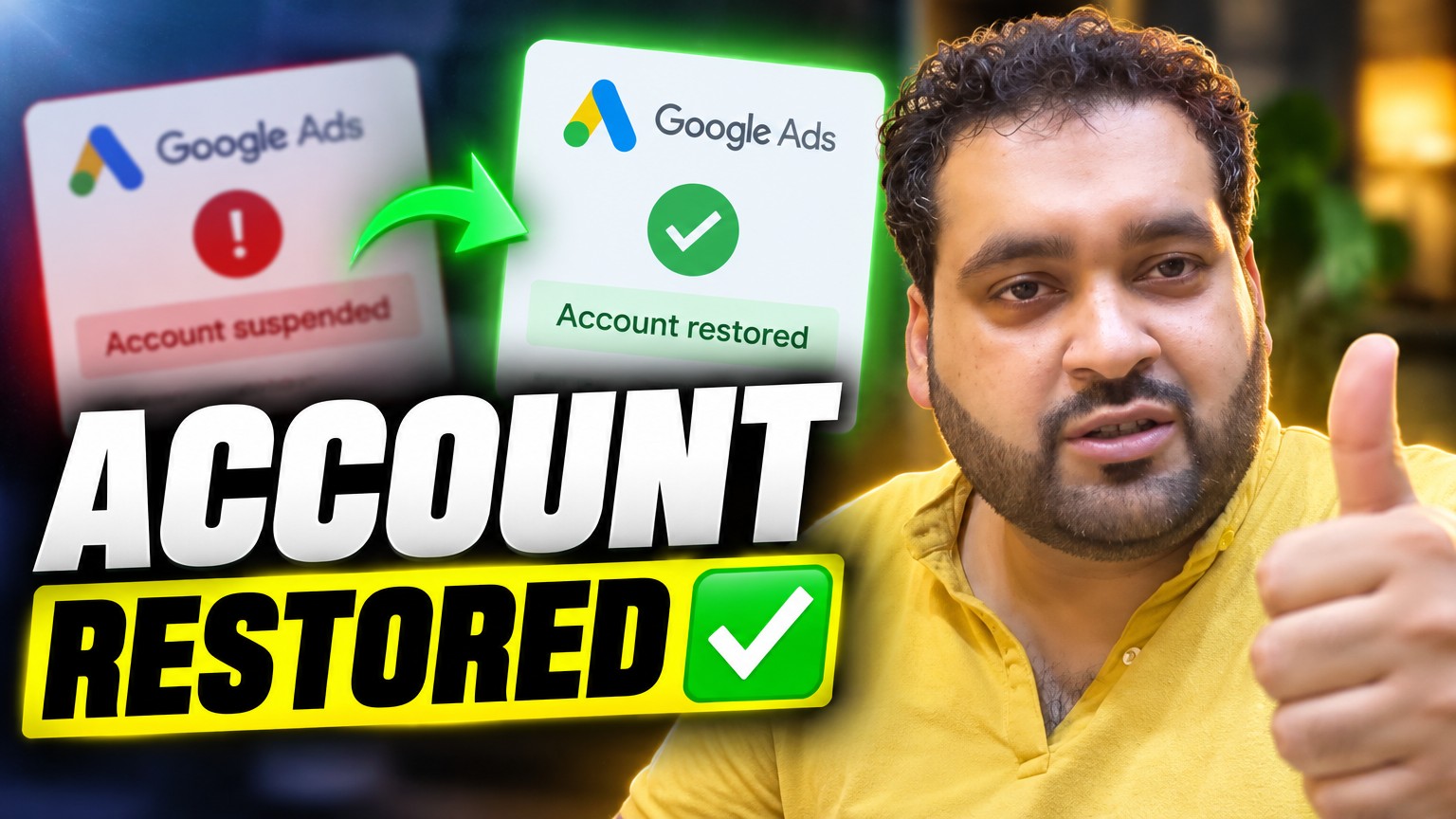
After a detailed review, several rounds of website corrections, evidence preparation and appeals, the client ultimately received confirmation that the suspension appeal was successful and the account had been reactivated.
This article explains what we reviewed and what advertisers can learn from the case.
Important: This is an educational case study. Google makes the final decision on every suspension and appeal. A previous successful outcome does not guarantee that another account will be reinstated.
What Is Google Ads Circumventing Systems?
Google’s Circumventing Systems policy prohibits attempts to interfere with or bypass its advertising systems and policy-enforcement processes.
Google specifically lists examples such as creating new accounts after a suspension in an attempt to re-enter the advertising system, creating variations of previously disapproved domains or content to avoid enforcement, and spreading policy-violating advertising activity across several accounts.
Under the Multiple Account Abuse section, Google explicitly says advertisers should not create multiple accounts after suspension to bypass policy enforcement.
This is why one of the most important pieces of advice I can give is:
Do not create another account simply to escape the suspension.
If you believe the suspension is incorrect, use the legitimate review and appeal process.
Why Circumventing Systems Suspensions Need a Wider Investigation
An advertiser sometimes sees one policy label and assumes that only one issue needs to be reviewed.
That can be a mistake.
Google says that when investigating Circumventing Systems, it may review information from multiple sources, including:
- Advertisements
- Website
- Google Ads accounts
- Third-party sources
That is very important.
It means a suspension review should not necessarily stop at the advertisement that was running when the account was suspended.
For this case, our team reviewed the broader environment.
We looked at the account history.
We looked at the website.
We looked at the business identity.
We looked at policy pages.
We looked at products.
We looked at technical issues.
We looked at previous appeals.
And we looked at evidence that could explain why the advertiser legitimately operated its business and advertising accounts.
The Suspension in This Case
The account featured in this case study was suspended for:
Circumventing Systems: Multiple Account Abuse
The business disputed that it was intentionally using multiple accounts to abuse Google’s systems.
But saying:
“We didn’t do anything wrong.”
is not enough.
A useful appeal needs to address the actual concern.
So before preparing the next submission, our team started with a comprehensive review.
Our Suspension Review Goes Beyond the Google Ads Account
At AARSWEBS, we have built a large internal compliance review framework based on the issues we repeatedly encounter while working on Google Ads policy cases.
The objective is not to create unnecessary work.
The objective is to identify inconsistencies that could make the business, website or advertising setup difficult to understand.
In this case study, those checks included areas such as:
- Google Ads account history
- Previous policy actions
- Website pages
- Business identity
- Contact details
- Search Console
- SSL and security
- Broken URLs
- Product availability
- Checkout
- Refund terms
- Shipping information
- Privacy information
- Business claims
- Social media
- Hosting
- Domain information
- Supporting documentation
Not every suspension requires the same checks.
But serious suspension cases deserve a serious diagnosis.
1. Check Business Identity Consistency
This is one of the first areas I recommend reviewing.
Suppose your website says your legal operator is:
ABC Company LLC
but your Privacy Policy refers to:
XYZ Online Store
Your social media uses another business name.
Your payment documentation contains a fourth name.
Even if there is a legitimate explanation, this creates unnecessary ambiguity.
In the case featured in the video, our review identified areas where the legal business identity was not consistently reflected across website policies.
So we reviewed pages including:
- About Us
- Privacy Policy
- Refund Policy
- Terms
- Contact page
- Product pages
Your website should make it reasonably clear who the customer is doing business with.
2. Verify Contact Details
Never assume your contact details work simply because they are displayed on the website.
Our review process can include testing:
- Phone number
- Email address
- Contact form
- Support links
- Customer-service pages
- Social media links
If a phone number is displayed, does someone answer?
If a contact form exists, does the submission actually reach the business?
If an email address is displayed, does it work?
These are small details, but they matter to users too.
3. Keep Your Support Hours Consistent
One of the kinds of issues shown in this case study was conflicting customer-support information.
For example:
One page might say:
Monday to Friday
Another:
Monday to Sunday
Another:
24/7 Support
Your FAQ may show one time zone.
Your Contact page may show another.
None of these differences necessarily proves malicious intent.
But they create confusion.
A cleaner website uses consistent business information across all relevant pages.
4. Review Social Media Information
Your website is not necessarily the only public information associated with the business.
We also review whether public-facing social profiles are reasonably consistent with the website.
Check:
- Business name
- Website
- Phone number
- Business description
- Operating hours
- Address where applicable
If your Facebook About section tells one company story while the website tells another, clean it up.
Consistency is also good branding.
5. Check Broken Links
In the case study, we found examples of broken links within important website policies.
This is easy to overlook.
You update a domain.
You redesign a website.
You change a page URL.
Months later, your Privacy Policy still links to an old page.
Use a crawler or manual review to check important website links.
Particularly:
- Privacy Policy
- Terms
- Refund Policy
- Shipping Policy
- Contact page
- Product pages
- Checkout
- Footer
- Navigation
Broken links are not good for customers, search engines or compliance reviews.
6. Review Product Availability
This was another interesting issue in the case.
Some products displayed conflicting availability information.
A page could show:
Sold Out
while another element still showed:
Add to Cart
Or the structured/coded information did not match what the customer could see.
This can happen because of:
- Theme bugs
- Plugin conflicts
- Inventory-sync issues
- Structured-data problems
- Custom coding
The website may appear visually functional while the underlying page contains conflicting information.
If you operate an e-commerce store, review product availability carefully.
7. Test Your Checkout
Do not stop your compliance review at the Add to Cart button.
Go through the purchase journey.
We may perform test transactions where appropriate to check:
- Product selection
- Cart
- Pricing
- Discounts
- Shipping
- Checkout
- Payment options
- Order confirmation
If your website advertises payment methods that do not appear at checkout, correct the mismatch.
If shipping information changes halfway through checkout, investigate it.
If the checkout fails, fix it.
A functioning buying journey benefits customers regardless of Google Ads policy.
8. Review Pricing and Discount Formatting
In this case study, we also found examples of pricing or availability formatting that required attention.
For example:
Regular price: $9.99
Sale price: $7.99
Status: Sold out
But other website elements could indicate that the product remained purchasable.
Small conflicts like this may be caused by technical issues.
They should still be corrected.
9. Review Privacy, Refund, Shipping and Terms Pages
These pages should not exist only because a WordPress template told you to create them.
They should accurately reflect the business.
Check:
Privacy Policy
Does it accurately describe how information is collected and used?
Refund Policy
Does it match the actual refund process?
Shipping Policy
Does it reflect the countries, delivery time and process actually offered?
Terms of Service
Does the legal business identity match the rest of the site?
Copying another company’s policies and changing the company name in two places is not a good compliance strategy.
10. Check Your Business Claims
Another issue we look for is unsupported marketing language.
Imagine your website says:
“The #1 provider in the market.”
What supports that statement?
Was the business ranked number one by an identifiable organization?
Is there a credible award?
Is there evidence?
Or is it simply marketing language?
Google’s Misrepresentation policy specifically prohibits misleading information about a business, its products, services and qualifications. Unacceptable Business Practices is also treated as an egregious policy category.
Use strong marketing.
But keep factual claims supportable.
11. Review Google Search Console
Search Console is an important part of our technical review.
For example, when Google identifies a destination under the Compromised Site policy, Google itself recommends using the Search Console Security Issues report to identify malicious software and security problems.
We review areas such as:
- Security issues
- Unexpected indexed URLs
- Website errors
- Suspicious pages
- Hacked content
- Technical anomalies
If the account is suspended for Circumventing Systems rather than Compromised Site, that does not automatically mean Search Console is the cause.
It is one diagnostic source among many.
12. Check Website Security
Depending on the case, technical checks can include:
- SSL
- CMS version
- Plugins
- Themes
- Scripts
- Redirects
- Malware
- Hosting
- Domain reputation
- Blacklisting
Google defines a compromised destination as a site whose code has been manipulated—often without the owner’s knowledge—to benefit a third party or potentially harm users.
If Google reports a security-related problem, do not simply appeal before investigating the site.
13. Review Account History
The Google Ads account itself matters too.
We look at:
- Previous account access
- Previous suspensions
- Related accounts
- Billing history
- Verification
- Advertiser identity
- Earlier appeals
- Policy notifications
For Multiple Account Abuse specifically, Google recommends explaining why multiple accounts exist and resolving suspensions connected with related accounts when applicable.
This is why account history can be crucial.
14. Prepare Supporting Business Evidence
The client in this case provided documentation relating to its legitimate business operation.
Depending on the case and what Google requests, supporting materials may include things such as:
- Business registration
- Certificate of incorporation
- Tax documentation
- Domain ownership
- Hosting ownership
- Banking or payment evidence
- Business-address documentation
- Licences where applicable
What should you provide?
Only what is relevant, genuine and requested or useful to establishing the facts.
Do not manufacture documents.
Do not alter documents.
Do not provide inaccurate explanations.
Google says suspension appeals should be thorough, accurate and honest.
15. Do Not Create New Google Ads Accounts to Bypass the Suspension
This deserves its own section.
If your account is suspended, creating another account is not a shortcut.
Google’s Circumventing Systems policy specifically prohibits creating new Google Ads accounts after a suspension in an attempt to get around enforcement.
Google’s suspension appeal form also warns advertisers not to create new accounts while waiting for a suspension appeal response because those accounts can also be suspended.
Use the legitimate appeal process.
What Happened in This Case?
The process was not:
Suspension → one email → instant reinstatement.
The team went through multiple rounds.
There were website issues to correct.
There were business-information issues to address.
There were previous appeal stages.
There was supporting evidence to organize.
At one point, an appeal was unsuccessful.
The team continued investigating and addressing legitimate issues.
Then, on September 16, 2026, the client received confirmation that the suspension appeal had been successful.
The Google Ads account was reactivated.
The account subsequently showed that the suspension had been lifted.
The ads still required normal account matters such as billing to be resolved before serving, but the suspension itself had been removed.
That distinction matters:
Reinstatement does not automatically mean campaigns instantly begin serving.
You should still check billing, campaigns, policy statuses and account settings.
What Can We Learn From This Google Ads Suspension Case Study?
The biggest lesson is:
Do not treat a Google Ads suspension as one error message.
Treat it as an investigation.
If your account says Circumventing Systems, understand why Google may see circumventing behavior.
If it says Multiple Account Abuse, review your account relationships and history.
If your business identity is inconsistent, fix it.
If your website is broken, repair it.
If your policies are inaccurate, update them.
If Google asks for verification, complete it accurately.
Then prepare an appeal that explains the real situation rather than submitting:
“Please reactivate my account. I did nothing wrong.”
How Should You Appeal a Suspended Google Ads Account?
Google’s current process allows suspended advertisers to start an appeal from the suspension notification in their account.
Google advises advertisers to submit one appeal at a time and says misuse of the appeal process can cause appeal processing to be temporarily suspended.
Google also says suspended accounts remain suspended unless successfully reinstated through the appeal process.
A good appeal should therefore be:
Relevant
Address the actual policy.
Accurate
Do not exaggerate or hide inconvenient facts.
Evidence-based
Provide useful documentation when applicable.
Specific
Explain what happened and what has been corrected.
Consistent
Make sure the explanation matches your website and account.
Can AARSWEBS Guarantee Google Ads Reinstatement?
No.
And no legitimate agency should promise that Google will definitely restore your account.
Google controls enforcement and reinstatement.
What AARSWEBS can do is provide a structured review of eligible cases.
Our current Google Ads Disapproval & Suspension Recovery process follows four main stages:
Diagnose → Correct → Prepare → Follow Up
We review the policy notice, account history, website, landing pages, business information and relevant technical signals before preparing the next legitimate step.
Need Help With a Google Ads Suspension?
If your Google Ads account is suspended for:
- Circumventing Systems
- Multiple Account Abuse
- Unacceptable Business Practices
- Misrepresentation
- Compromised Site
- Malware
- Another advertising-policy issue
our team can review the case and identify the next legitimate steps.
👉 Google Ads Disapproval & Suspension Recovery:
https://aarswebs.com/google-ads-disapproval/
We can also help with:
Google Ads Management
Google Ads Audits
Google Merchant Center issues
Google Business Profile issues
Digital marketing management
Past outcomes do not guarantee future reinstatement.
Our role is to diagnose the case, address agreed issues, help organize relevant evidence and support the legitimate appeal process.
Google makes the final decision.
— Ali Raza
Founder, AARSWEBS Solutions Co. LLC
Google Partner Digital Marketing Agency
Frequently Asked Questions
What does Google Ads Circumventing Systems mean?
It refers to practices that interfere with or attempt to bypass Google’s advertising review and enforcement systems. This can include creating new accounts after a suspension to re-enter the advertising system or using new domains/content to avoid previous enforcement.
What is Multiple Account Abuse in Google Ads?
Google describes Multiple Account Abuse as using multiple accounts in ways that attempt to bypass enforcement, including creating more accounts after suspension to continue advertising in violation of policy.
Can I create another Google Ads account after suspension?
Creating another account specifically to bypass an existing suspension can violate Google’s Circumventing Systems policy. Use the official appeal process instead.
Is Circumventing Systems considered a serious violation?
Yes. Google lists Circumventing Systems as an egregious policy category and states that such violations can result in immediate suspension without prior warning.
Does Google only review my ads during a suspension?
No. For Circumventing Systems, Google says it may review information from multiple sources, including the ad, website, accounts and third-party sources.
Should I check Search Console after a suspension?
It can be useful, particularly when website-security or Compromised Site issues may be involved. Google specifically recommends Search Console’s Security Issues report for compromised destinations.
Can inconsistent business information cause problems?
Inconsistent names, contact details, support information or policies can create confusion about the business. They should be corrected as part of a quality and compliance review, although the presence of one inconsistency does not by itself prove why Google suspended an account.
What documents can help with a suspension appeal?
The appropriate documents depend on the case. Relevant evidence can include genuine business registration, ownership, licensing or account-related information when it helps explain the situation or when Google requests it.
How many appeals should I submit at once?
Google currently recommends submitting one suspension appeal at a time.
How long does a Google Ads suspension last?
Google describes an account suspension as permanent unless the advertiser successfully appeals and the account is reinstated.
Does a successful AARSWEBS case guarantee my account will be reinstated?
No. Every suspension is evaluated independently by Google. AARSWEBS can review and assist with eligible cases, but Google controls the final decision.