Google Ads Account Structure 2026: Exact Match vs Phrase Match for Tight Budgets
One of the most common Google Ads questions I receive is not about creating ads.
It is about structure.
How many keywords should be inside an ad group?
Should you use Exact Match?
Should you use Phrase Match?
And what happens when keyword research gives you 20, 30 or even more keywords for what looks like the same service?
Recently, I received almost exactly this question from someone helping a design agency with Google Ads.
The agency has a tight budget, so the advertiser naturally wants maximum control.
The first idea was to use Exact Match.
But after completing keyword research, every theme contained more than 20 possible keywords.
So what should you do?
Let’s discuss it.
Exact Match vs Phrase Match in Google Ads
First, you need to understand that Exact Match and Phrase Match are not simply two different ways of writing the same keyword.
They give Google different levels of flexibility.
Exact Match
Exact Match gives you the greatest degree of control of the main keyword match types.
For example:
[web design agency]
Google can still match close searches with the same meaning or intent, so “Exact” should not be interpreted as literally matching only those exact three words.
But generally, the reach is narrower.
That can make Exact Match useful when:
- Your budget is limited
- You already know your highest-value search terms
- You are targeting very specific commercial intent
- You want tighter control over traffic
- You have conversion data showing which searches work
However, there is also a trade-off.
You may limit the amount of data and traffic your campaign receives.
And when an account is completely new, that can sometimes make learning slower.
What About Phrase Match?
Phrase Match gives Google more room.
For example:
“web design agency”
Your ad can potentially appear for searches that include the meaning of the keyword, even when the search isn’t a word-for-word copy.
This is why Phrase Match can be extremely useful for discovering how real customers search.
But there is a condition.
You need to monitor it.
Don’t launch Phrase Match keywords and then disappear for one month.
Go into your Search Terms Report and see what is actually happening.
Ask:
- Which searches are relevant?
- Which searches show commercial intent?
- Which searches are wasting money?
- Which searches should become negative keywords?
- Which search terms are actually converting?
That data can become extremely valuable.
Does Phrase Match Trigger Broad Match Searches?
This is another important question.
Phrase Match does not simply become Broad Match.
However, modern Google Ads matching is based increasingly on the meaning and intent behind a search rather than only the exact words typed by a user.
As a result, Phrase Match can sometimes feel broader than advertisers remember from older versions of Google Ads.
That is why you should never judge the campaign only by the keywords you entered.
Look at the actual search terms.
The Search Terms Report tells you what people searched before they clicked your ad.
And that report should become one of your best friends when managing a Search campaign.
Should a New Campaign Start With Exact or Phrase Match?
There isn’t one rule that applies to every Google Ads account.
For the particular situation I was asked about—a competitive design agency with a tight budget but limited recent campaign data—I would consider testing Phrase Match carefully to gather data.
The important word here is:
Carefully.
I would monitor search terms frequently, build negative keywords and see which searches generate genuine leads or conversions.
After gathering useful data during the first few weeks, I can make better decisions.
Some searches may deserve Exact Match keywords.
Some Phrase Match keywords may continue performing well.
Some keywords may need to be paused completely.
This is better than making every decision before receiving any real campaign data.
At the same time, if you already know exactly which search terms produce profitable customers, starting with Exact Match can make complete sense.
Google Ads strategy should be based on the account—not ideology around one match type.
Is 20+ Keywords in One Ad Group Too Many?
This is where many advertisers focus on the wrong question.
They ask:
“How many keywords should I put in one ad group?”
I would first ask:
“Do all of these keywords have the same intent?”
That is what matters.
Imagine these keywords:
- web design agency
- website design company
- hire web designer
- professional web design service
- web development agency
Depending on the business and landing page, several of these could represent a similar commercial intention.
Now compare them with:
- how to design a website
- free website templates
- web design course
- web designer salary
- web design jobs
Those keywords are related to “web design,” but their intent is completely different.
Putting them into the same ad group would make little sense.
My Preferred Number of Keywords Per Ad Group
I don’t believe every ad group needs to contain only one keyword.
The old Single Keyword Ad Group approach is not necessary for every campaign.
But I also don’t like throwing dozens of unrelated keywords into the same ad group.
As a practical starting point, I often prefer around:
5–10 closely related keywords per ad group.
Can you use more?
Of course.
The number itself is not a Google Ads law.
If 15 or 20 keywords genuinely represent the same intent and can use the same ad copy and landing page, that can work.
The problem starts when you put 20 keywords together simply because Keyword Planner placed them under the same general topic.
Your structure should be based on intent, not just keyword similarity.
Exact Match vs Phrase Match When Budget Is Tight
A tight budget changes the way I think about Google Ads.
You cannot afford to buy unnecessary traffic just to “see what happens.”
Every click needs to teach you something.
Therefore, your campaign should have strong controls around:
1. Search Intent
Prioritize keywords connected with people who are looking for the actual service.
For a design agency:
“hire web design agency”
is much more commercially relevant than:
“web design inspiration”
2. Search Terms
Review the real searches producing impressions and clicks.
Do not assume the keyword itself tells the entire story.
3. Negative Keywords
This is especially important when using Phrase Match.
If someone is searching for jobs, courses, free tools or unrelated services, negative keywords can help protect your budget.
4. Location Targeting
A design agency targeting customers in Dubai should not casually spend its limited budget attracting irrelevant traffic from markets it does not serve.
Check your location settings carefully.
5. Landing Page
Your keyword structure cannot rescue a poor landing page.
If someone searches for:
web design agency Dubai
and lands on a generic homepage talking about ten unrelated services, you are creating unnecessary friction.
The keyword, ad and landing page need to tell the same story.
6. Conversion Tracking
Without accurate conversion tracking, you don’t really know which keyword is performing.
Clicks are not the objective.
Leads and sales are.
For service businesses, I also recommend looking beyond the number of form submissions.
Ask whether those leads were actually qualified.
Don’t Assume Phrase Match Is Always Cheaper
There is another misconception worth addressing.
Some advertisers assume:
Exact Match = expensive CPC
and:
Phrase Match = cheap CPC
That is too simplistic.
Google Ads CPC is influenced by many factors, including:
- Competition
- Auction conditions
- Ad Rank
- Expected CTR
- Ad relevance
- Landing page experience
- Bidding strategy
- Location
- Device
- Search intent
- Competitor activity
A Phrase Match query can be expensive.
An Exact Match query can be inexpensive.
I would evaluate match types based on conversion economics, not only CPC.
A $10 click that generates profitable customers may be better than a $2 click that generates nothing.
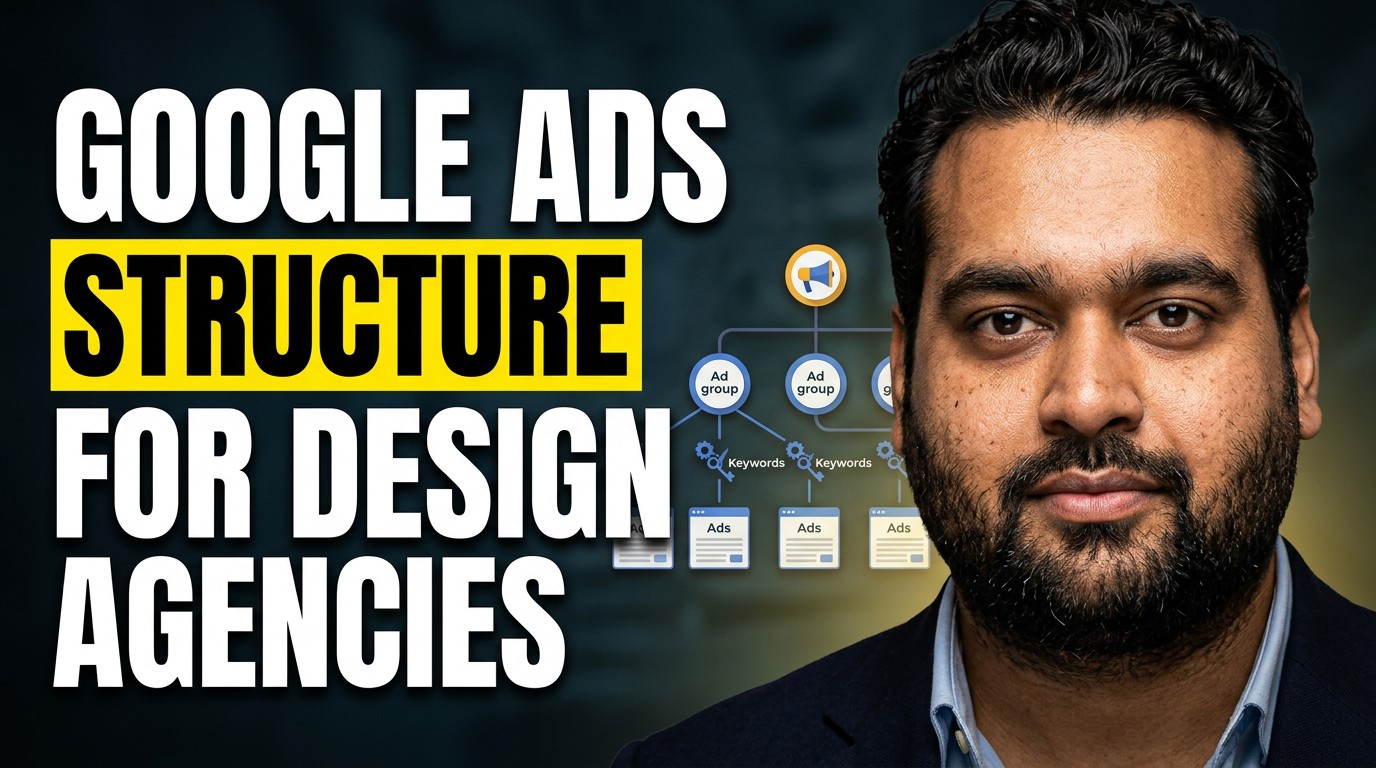
Google Ads Structure Example for a Design Agency
Instead of one massive ad group containing every design-related keyword, you might create separate intent-based groups.
Ad Group 1: Web Design Agency
Potential keywords:
- “web design agency”
[web design agency]
“website design company”
[website design company]
“professional web design agency”
Ad Group 2: Ecommerce Web Design
Potential keywords:
- “ecommerce web design agency”
[ecommerce web design]
“shopify web design company”
[shopify website designer]
Ad Group 3: WordPress Design
Potential keywords:
- “wordpress web design agency”
[wordpress web designer]
“wordpress website company”
Each ad group can then have messaging and a landing page more closely connected with the customer’s intention.
That makes the account easier to optimize.
What Should You Do After Two or Three Weeks?
Don’t automatically change everything after exactly 14 or 21 days.
Instead, look at the data you have accumulated.
Review:
- Impressions
- Clicks
- Search terms
- Conversion volume
- Cost per conversion
- Conversion quality
- Negative keyword opportunities
- Location performance
- Device performance
- Landing-page performance
Then make decisions.
You may discover that a Phrase Match keyword is generating profitable searches you never considered.
You may also discover that another Phrase Match keyword is wasting money.
You can then:
- Add converting searches as Exact Match
- Add irrelevant searches as negatives
- Pause poor-performing keywords
- Separate strong search themes
- Improve ads
- Improve landing pages
- Shift budget toward better-performing intent
That is how an account becomes better structured over time.
Competitor Research Is Also Important
For a competitive industry like web design, do not analyze your account in isolation.
Search the keywords yourself.
Look at the companies appearing in the ads.
Study:
- Their headlines
- Their offers
- Their landing pages
- Their pricing positioning
- Their calls to action
- Their trust signals
- Their differentiation
You don’t need to copy your competitors.
You need to understand what your potential customer sees before deciding which company to contact.
Final Thoughts on Google Ads Account Structure
So, should you use 20+ Exact Match keywords in one ad group?
Possibly—if they genuinely represent the same intent.
But most of the time, I prefer tighter groups based around closely related search intent.
Should you use Phrase Match?
It can be an excellent way to uncover new search opportunities, particularly when you need more data.
But monitor the Search Terms Report carefully and build your negative keyword list.
Should you eventually use Exact Match?
Absolutely, especially when you identify high-value searches and want more control around proven intent.
The bigger lesson is this:
Don’t structure Google Ads around keyword count. Structure it around customer intent.
And remember that match type is only one part of successful PPC management.
Your location targeting, campaign optimization, landing page, conversion tracking, offer and competitor strategy all matter.
Need Professional Google Ads Management?
If your Google Ads campaigns are generating clicks but not enough quality leads or sales, my team at AARSWEBS.com can help.
We are a Google Partner digital marketing agency working with businesses on Google Ads strategy, campaign management, conversion tracking, optimization and landing-page/CRO recommendations.
If you have a question about your Google Ads structure, reach out to the AARSWEBS team.
And if you are a PPC professional yourself, I would also love to hear your opinion:
How many keywords do you normally keep in one ad group, and are you currently getting better results from Exact Match or Phrase Match?