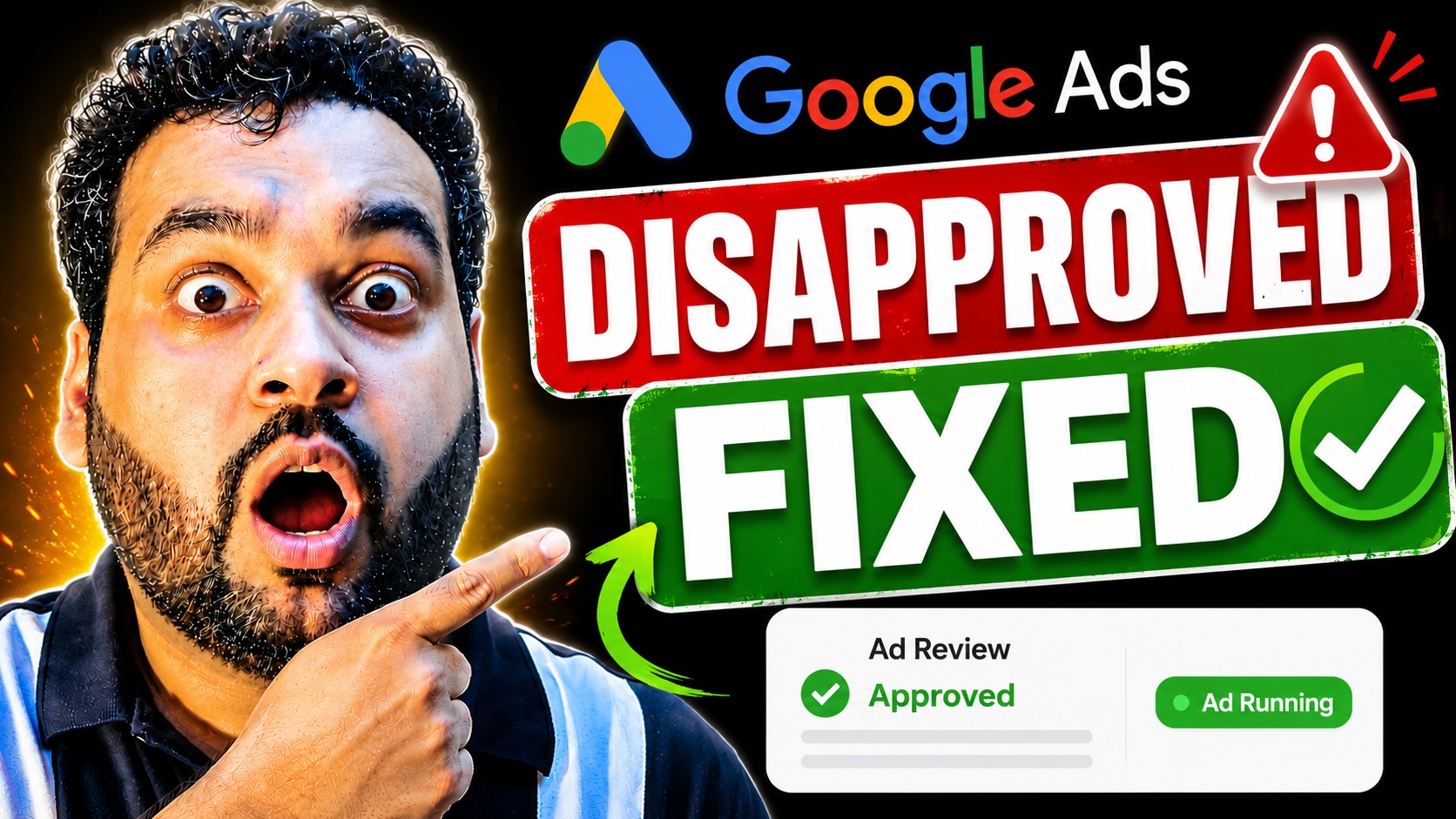
Google Ads Disapproved for Compromised Site & Circumventing Systems – Case Study
Google Ads disapprovals can be very frustrating, especially when your ads are disapproved for serious policy reasons such as Compromised Site and Circumventing Systems.
In this case study, I’m going to share how our team at AARSWEBS.com helped a client whose Google Ads were disapproved because of these two policy issues.
Before we start, please understand one important thing.
This was a Google Ads disapproval case, not a suspension case.
Circumventing Systems can sometimes lead to account suspension, but in this particular case, the ads were disapproved only.
Still, when Google flags your ads for policies like Compromised Site, Circumventing Systems, Malicious Software, Misrepresentation, Unreliable Claims, Enabling Dishonest Behavior, or similar issues, you need to take the matter seriously.
About AARSWEBS.com
My name is Ali Raza, and I’m the owner of a Google Partner company named AARSWEBS.com.
At AARSWEBS, we help clients with:
- Google Ads disapprovals
- Google Ads account suspensions
- Google Merchant Center disapprovals and suspensions
- Google Business Profile suspensions
- YouTube Ads disapprovals
- Landing page compliance reviews
- Website compliance audits
- Google Ads account audits
- Google Ads management
- New Google Ads account setup
- Advertiser verification
- Compromised site issues
- Malicious software issues
- Circumventing Systems issues
- Unreliable claims issues
- Destination policy issues
We have helped many clients over the years, and I regularly share real case studies on my YouTube channel to educate advertisers and business owners.
The Client’s Problem
The client had a vehicle history check website.
When they tried to run ads, Google disapproved the ads because the website was flagged for two major issues:
- Compromised Site
- Circumventing Systems
The ads were not eligible to run, and the account had multiple policy violation warnings.
This is a serious situation because repeated attempts without fixing the real issue can sometimes create bigger problems for the advertiser.
That is why we always recommend doing a proper audit before submitting repeated appeals.
What Is Compromised Site in Google Ads?
A Compromised Site issue generally means that Google believes the website or destination may have a security-related issue.
This may include suspicious code, injected scripts, redirects, malware, adware, spyware, plugin issues, theme errors, or other security problems.
Sometimes the issue is actually present on the website.
Sometimes Google’s automated systems may flag something because of a misunderstanding, old code, third-party scripts, redirects, or suspicious signals.
Either way, you need to investigate the website properly before asking Google for another review.
What Is Circumventing Systems in Google Ads?
Circumventing Systems is another serious Google Ads policy issue.
It can be triggered when Google believes that an advertiser, website, landing page, or system is trying to interfere with Google’s review process or hide something from Google.
This may include issues like cloaking, misleading redirects, manipulation, suspicious destination behavior, or other signals that make the website look non-compliant.
In this case, the ads were disapproved, but in other cases, Circumventing Systems may also lead to Google Ads account suspension.
Why We Audit Everything, Not Just One Error
Many advertisers make one common mistake.
They only try to fix the exact error mentioned in Google Ads.
For example, if the ad is disapproved for Compromised Site, they only check malware.
If the ad is disapproved for Circumventing Systems, they only check redirects.
But when Google reviews your website again, it may look at the full website, business model, claims, trust signals, content, technical setup, landing page, and account history.
That means another issue can also stop your approval later.
For example, even if your current issue is Compromised Site, Google may still find problems related to:
- Unreliable claims
- Misrepresentation
- Missing policies
- Unclear pricing
- Missing contact information
- Suspicious redirects
- Broken links
- Malicious scripts
- Website security
- Government affiliation confusion
- Duplicate domains
- Old website references
- Poor landing page experience
This is why our team uses a detailed compliance process.
Our 160+ Point Google Ads Compliance Checklist
For cases like this, we use our own 160+ point audit checklist.
This checklist helps us review the website, landing page, account, tracking, technical setup, policy pages, and compliance signals before making recommendations.
In this case, multiple team members were involved, including our technical SEO developer and Google Ads compliance team.
Issues Found During the Audit
During the audit, we found several issues that needed attention.
1. Search Console and Indexation Issues
Our technical SEO team found that some public pages had indexation issues in Google Search Console.
When Google cannot crawl or understand website pages properly, it can create problems during ad review.
2. Canonical and URL Issues
We found canonical-related concerns and URL structure issues.
There were also signs of duplicate pages and URL slug problems.
These technical issues may not always be the direct cause of disapproval, but they can create confusion for Google’s systems.
3. Sitemap and Robots.txt Issues
We suggested adding and correcting sitemap.xml and robots.txt.
These files help search engines crawl and understand the website properly.
For Google Ads compliance, technical clarity is very important.
4. JavaScript Coding Errors
We also found JavaScript-related coding errors on the homepage.
In some cases, JavaScript issues can create broken functionality, redirect confusion, or rendering problems.
5. No Indexed Pages Found
At one point, the domain had no indexed pages found.
This can create trust and crawlability issues, especially when Google is reviewing your destination.
6. Possible Government Impersonation or Unclear Affiliation
Because the website was related to vehicle history checks, we also reviewed whether the website could create confusion about government affiliation.
We suggested adding clear disclaimers and making sure the website did not appear to impersonate any government service.
7. Missing Important Pages
We recommended adding and improving important pages such as:
- Privacy Policy
- Contact Us
- About Us
- Pricing
- Terms and Conditions
- Affiliate Disclosure
- Refund or cancellation information if applicable
These pages help improve trust and transparency.
8. Compromised Site and Security Concerns
We reviewed the website for possible compromised site triggers such as:
- Scraped content
- Suspicious redirects
- Malware signals
- Spyware signals
- Broken scripts
- Injected code
- Theme or plugin issues
- Unusual third-party elements
9. Old Domain References
One important issue we found was that another business/domain reference was present on the website.
When we asked the client, they explained that this was their old domain before they purchased the current .com domain.
This kind of old domain reference can create confusion for Google and may contribute to Circumventing Systems or cloaking-related concerns.
10. Pricing Transparency Issues
We also reviewed pricing transparency and suggested improvements.
For Google Ads, users should clearly understand what they are buying, how much it costs, and what service is being provided.
11. Risk of Unreliable Claims
We also found wording such as large numerical claims that could potentially trigger Unreliable Claims issues later.
Even though the current disapproval was for Compromised Site and Circumventing Systems, we still recommended fixing all risky claims.
This is very important because once Google reviews the site again, it may identify additional policy problems.
Communication with Google
During the process, the client also received communication from Google saying that the technical team had not yet provided detailed insight into the issue.
Google recommended further investigation of the website for possible security vulnerabilities, redirects, or policy-related issues.
This supported our own approach because we were already investigating website security, redirects, Search Console, technical SEO, and policy compliance.
Why Patience Is Important
Even after you make all the website changes, you cannot expect Google Ads to approve everything instantly.
Google needs time to crawl the updated website.
The Search Console data needs to refresh.
Google’s review systems need to re-check the destination.
In some cases, manual review may also be required.
This is why patience is very important in disapproval and suspension cases.
Using Test Accounts Carefully
We also used our own test account carefully during the review process.
We did this because we did not want to make frequent attempts using the client’s main account while it was already in a disapproved state.
Frequent repeated attempts can sometimes make the situation worse and may increase the risk of account-level problems.
Website Flagged as a Malicious Entity
At one stage, Google’s wider team confirmed that the website associated with the disapproved ads had been flagged as a malicious entity by their system.
This meant the site could not be re-enabled at that time.
So we continued working on the issues and suggested further fixes.
Domain Change Recommendation
After reviewing the situation, we also suggested using another domain.
The client moved forward with another domain where the compliance issues were handled properly.
We made sure the required changes were implemented, reviewed broken links, malware risks, spyware risks, coding issues, inner page elements, and overall policy compliance.
Final Result: Ads Approved and Eligible
After all the work, the ads and assets were approved and eligible.
The website was out of the previous errors, and the client was able to move forward.
The client was happy with the result and shared a positive review for our service.
This became another successful Google Ads disapproval case study for AARSWEBS.com.
What Advertisers Can Learn from This Case Study
This case study teaches several important lessons.
First, do not treat Google Ads disapproval lightly.
Second, do not submit repeated appeals without fixing the actual issue.
Third, review the full website, not just the error message.
Fourth, check technical SEO, Search Console, sitemap, robots.txt, redirects, content, pricing, trust pages, old domains, and website security.
Fifth, understand that Google Ads approval may take time even after changes are made.
Sixth, work with a team that understands Google Ads policies and compliance.
Need Help with Google Ads Disapproval?
If your Google Ads are disapproved for Compromised Site, Circumventing Systems, Malicious Software, Misrepresentation, Unreliable Claims, Enabling Dishonest Behavior, Destination Policy, or any other issue, our team can help.
We also help with:
- Google Ads account suspensions
- Google Merchant Center suspensions
- Google Business Profile suspensions
- YouTube Ads disapprovals
- Landing page compliance
- Website compliance audits
- Google Ads setup and management
- Website development
- Web management
- Web hosting services
Visit AARSWEBS.com and contact our team today.
Service Link: [Add AARSWEBS Service Link Here]
Consultation Link: [Add Consultation Link Here]
Final Words
This was a successful Google Ads disapproval case where the client’s ads were disapproved for Compromised Site and Circumventing Systems.
Our team performed a detailed audit, reviewed the website from multiple angles, identified technical and policy-related issues, communicated with Google, suggested fixes, and helped the client get the ads approved and eligible again.
Every case is different, and no one can guarantee approval because Google makes the final decision.
However, a proper compliance audit, technical review, website fixes, and professional appeal strategy can improve your chances.
If you are facing Google Ads disapproval or suspension, reach out to AARSWEBS.com and our team will be happy to help.


![Google Ads Suspension [Counterfeit Goods]](https://aarswebs.com/wp-content/uploads/2026/07/Google-Ads-Suspension-Counterfeit-Goods-768x432.jpg)